
Find Your CNA Classes HERE
How AI Enters Healthcare
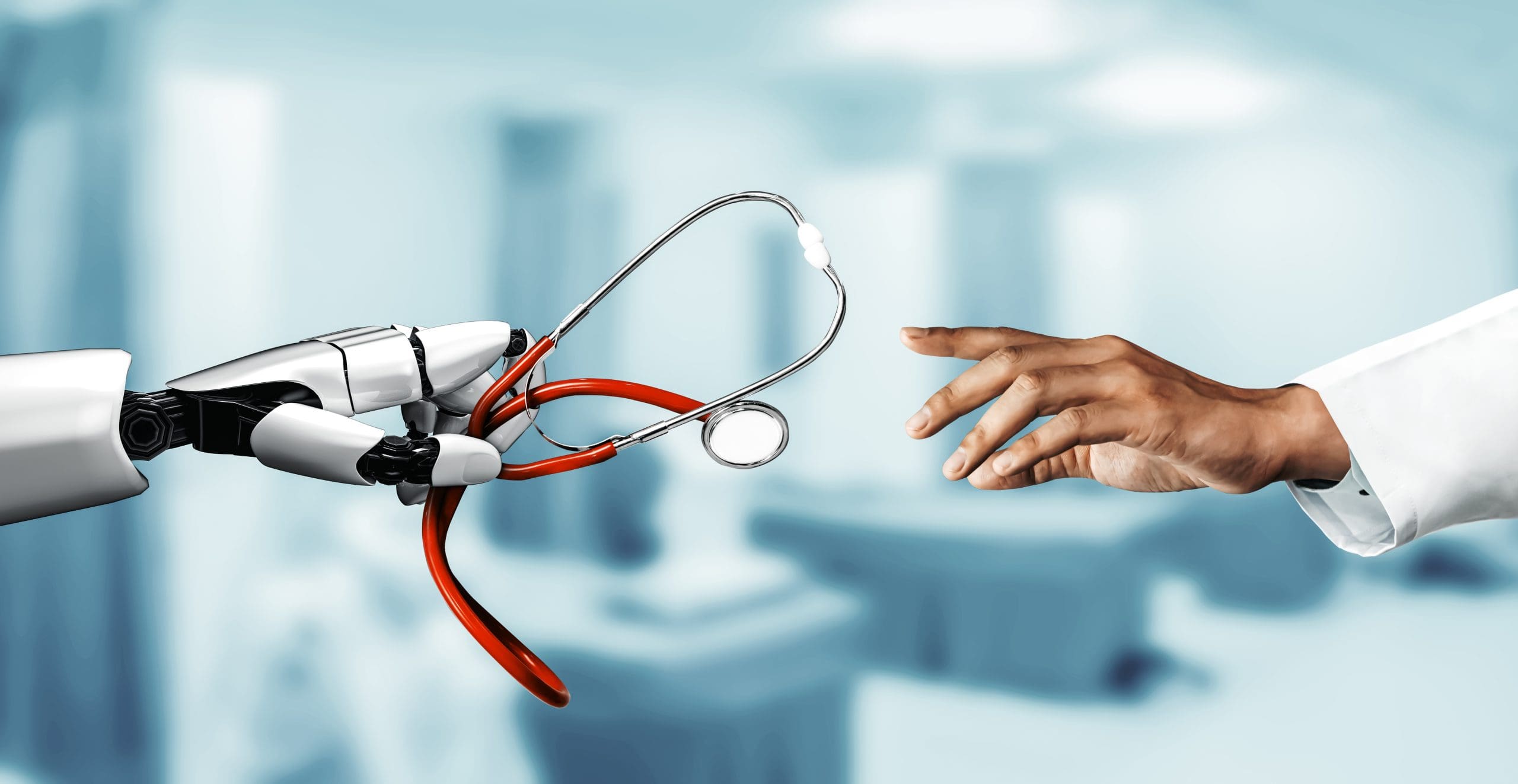
AI is being used in hospitals, nursing homes, and clinics to support staff and improve patient safety. It is not primarily being deployed to take over the human elements of care. Examples include:
- Robotic assistance for lifting and mobility – machines that help with patient transfers to reduce staff strain and injury risk.
- AI-powered monitoring – sensors and wearable devices that track vital signs and trigger alerts for concerning changes.
- Voice recognition and documentation tools – systems that speed up charting and reduce time spent on paperwork.
- Virtual health assistants – chatbots and reminder systems that help with scheduling and medication prompts.
These tools are best understood as supports for caregiving tasks rather than substitutes for the caregiver.
What Microsoft Research Shows
Microsoft carried out a large-scale study examining real-world interactions with its Copilot AI and introduced an “AI applicability score” to measure how well AI can perform tasks across different occupations. Some key takeaways relevant to nursing assistants:
- Jobs that focus on writing, summarizing, or data processing score high on AI applicability and are more exposed to automation.
- Jobs that require physical presence, direct human interaction, and emotional labor score low on AI applicability and are less exposed to replacement.
- Nursing assistants are identified as among the occupations least likely to be replaced, because much of the work involves hands-on care, empathy, and contextual judgment that current AI cannot replicate.
In short, the study supports the view that AI will change how care is delivered, but not eliminate the need for human caregivers.
The Human Side of Nursing That AI Cannot Replace
Even as technology improves, many aspects of caregiving remain fundamentally human. The Microsoft findings echo the everyday reality in care settings. Key elements that AI does not provide include:
- Emotional support – comforting patients and families, offering reassurance and human presence.
- Intuitive judgment – noticing subtle changes and making quick, contextual decisions that are not captured by data alone.
- Trust and rapport – building relationships through culturally aware communication and consistent personal care.
- Hands-on caregiving – assisting with bathing, feeding, grooming, and safe mobility.
These strengths explain why nursing assistants remain central to quality patient care.
Will AI Replace Nursing Assistants?
The short answer is no. Microsoft research suggests that nursing assistants are unlikely to face wholesale replacement by AI. Instead, the role is expected to evolve. Possible changes include:
- AI handling routine monitoring and automated alerts, improving response times.
- Robots assisting with heavy lifting and repetitive physical tasks, reducing injury risk.
- Documentation and administrative work becoming faster with speech-to-text and automated charting tools.
These shifts mean nursing assistants can spend more time on interpersonal care and activities that require a human touch.
Opportunities in an AI-Enhanced World
AI offers practical benefits that can improve working conditions and patient outcomes. Nursing assistants who embrace these changes may find new opportunities, such as:
- Reduced physical strain – assistive robots and lifting tools can lower the risk of musculoskeletal injuries.
- More direct patient time – automation of paperwork and monitoring frees time for meaningful interaction.
- New skill pathways – training in digital tools, monitoring systems, and basic troubleshooting can lead to career advancement.
- Increased value for empathy-driven care – as tasks become automated, the human elements of care will be even more highly valued.
How Nursing Assistants Can Prepare
Adapting to an AI-enhanced healthcare environment does not mean replacing your caregiving skills with technology. Instead, it is about combining traditional strengths with new tools to provide safer, more effective care. Nursing assistants can take several proactive steps to stay confident and competitive as AI becomes more common in healthcare:
- Stay updated on technology in your workplace – Learn about the devices, monitoring systems, and documentation tools that your hospital or nursing home introduces. Do not hesitate to ask supervisors for training or demonstrations.
- Strengthen your digital literacy – Basic computer and mobile device skills will become increasingly important. Becoming comfortable with electronic health records, telehealth platforms, and AI-powered note-taking tools will make your daily work easier and more efficient.
- Participate in formal training and certifications – Many healthcare organizations and community colleges are beginning to offer short courses on digital health tools, patient monitoring technology, and safe use of robotics in care settings. Taking these courses can give you a career edge.
- Focus on communication and empathy skills – As technology takes over routine tasks, your value as a caregiver will increasingly come from your ability to connect with patients. Practice active listening, cultural awareness, and emotional support strategies to strengthen this core area.
- Advocate for supportive AI use – Be involved in conversations about new technology at your workplace. Voice concerns if tools reduce human interaction, and highlight ways AI can support staff safety and patient comfort instead of cutting care quality.
- Network with peers and mentors – Join professional groups for nursing assistants where AI and healthcare technology are discussed. Peer networks can be a great way to share experiences, learn about new tools, and prepare for changes together.
- Plan for long-term career growth – Think about how new skills can open doors. With experience in digital tools, some nursing assistants may move into roles such as patient technology support, electronic health record specialists, or supervisory positions that involve training others on safe technology use.
By combining compassion with technology skills, nursing assistants can position themselves as essential team members in a healthcare system that is rapidly changing. The goal is not to compete with AI, but to use it as a partner that helps you deliver more effective and more human-centered care.
Final Thoughts
AI is changing healthcare, but Microsoft research reinforces that occupations rooted in physical care and human connection are among the least exposed to replacement. For nursing assistants, the future looks like transformation rather than eradication. Technology will take on more routine and physically demanding tasks, and caregivers will remain indispensable for the compassion, judgment, and human presence that define quality care.